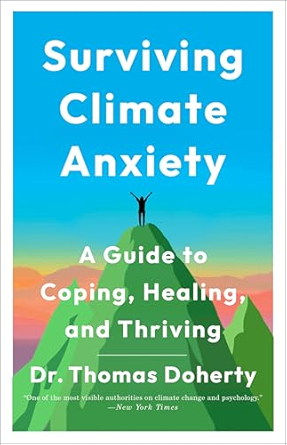
Climate anxiety now runs through your day-to-day life — and through your teams, your customers, your stakeholders. It can fuel tension and burnout… or become a driver of clarity, cooperation, and more robust decision-making. The question is no longer whether to embark on the transition, but how to lead it without damaging people or the organization.
Climate anxiety is no longer an anomaly — it’s the emotional context your teams are living in. Your job isn’t to deny it or dramatize it, but to turn it into a source of clarity and responsibility. The approach outlined here starts with the body and the nervous system, then moves up through emotions, identity, relationships, and strategic choices. It shows how to quiet the alarm without lowering standards — and how to keep making decisions over time without burning people out. The real question is no longer “Should we engage in the transition?”, but “How do we embed it in everyday practice?” The seven action paths below offer concrete ways to do exactly that.
1. Get out of alarm mode, get back into decision-making mode
Climate anxiety is normal — and even useful: it signals a real danger. But the risk is that it escalates into rumination, guilt, procrastination. You go round in circles, you postpone, you tense up. The only way out with your team is to acknowledge the emotional landscape created by climate anxiety, give it space, and then reopen the range of options:
Validate the team’s feeling.
Make it a legitimate topic for a structured conversation.
Create concrete action paths consistent with your current resources.
This shift turns raw alarm into the power to act. It rekindles creativity and gives people traction again. For a team, that means opening short, regular spaces to talk; making the mandate to teams explicit; and accepting that progress will come through trial and error — with promising a cure-all.
But beware that defusing the alarm doesn’t mean denying the danger. It means creating the conditions for attention to stabilize — and for decision-making to become possible again, session after session.
Warning
Don’t confuse emotional intensity with professional immaturity.
Avoid the double bind of “stay calm and perform,” which only makes the pressure worse.
Observe the impact of your messages: stressing the severity of the situation can paralyze people; downplaying it can leave them isolated.
“Intensity quotas” means dropping the pretense that everyone can absorb an unlimited volume of hard situations — and managing intensity as a scarce resource, just like time or budget. ↩︎
She spent 12 years in industry, working for Bolloré Technologies, among others. She co-founded Business Digest in 1992 and has been running the company since 1998. And she took the Internet plunge in 1996, even before coming on board as part of the BD team.
Nous utilisons des cookies sur ce site. Avec votre consentement, nous les utiliserons pour mesurer et analyser l'utilisation du site. Visitez notre page sur la politique cookie pour en savoir plus.
This website uses cookies to improve your experience while you navigate through the website. Out of these, the cookies that are categorized as necessary are stored on your browser as they are essential for the working of basic functionalities of the website. We also use third-party cookies that help us analyze and understand how you use this website. These cookies will be stored in your browser only with your consent. You also have the option to opt-out of these cookies. But opting out of some of these cookies may affect your browsing experience.