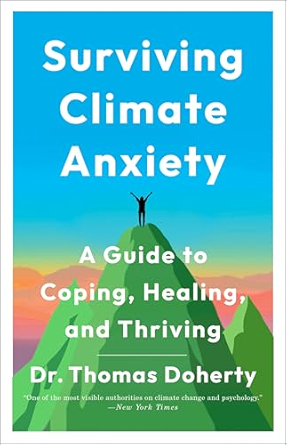
The best protection against climate anxiety isn’t to toughen up or “mute the sound,” but to build a structured architecture of attention, meaning, and graduated action. The goal is to turn an emotion that can overflow into collective endurance and more robust decisions. The five levers below are designed to be immediately actionable in an executive committee, a team, or a business unit.
Your teams don’t have a motivation problem — they have an overload problem. Everyone is informed, often too much, and rarely in actually useful ways. The first strategic move is to treat attention as a scarce asset to protect, just like capital or data.
Create “news windows”: a set moment (weekly or daily) to update on the climate information that truly matters, then close the feed.
Set anti-doomscrolling red lines: no compulsive scrolling of anxiety-triggering feeds during deep work blocks or in meetings.
Open every sensitive meeting with 60 seconds of re-centering: breathing, a reminder of the objective, and clarity on what will be decided and what won’t.
Key message: anxiety thrives in grey areas. The more attention is structured, the more emotions become manageable again. Stop letting the information stream wash over you — that alone is already regaining control of the transition.
She spent 12 years in industry, working for Bolloré Technologies, among others. She co-founded Business Digest in 1992 and has been running the company since 1998. And she took the Internet plunge in 1996, even before coming on board as part of the BD team.
Nous utilisons des cookies sur ce site. Avec votre consentement, nous les utiliserons pour mesurer et analyser l'utilisation du site. Visitez notre page sur la politique cookie pour en savoir plus.
This website uses cookies to improve your experience while you navigate through the website. Out of these, the cookies that are categorized as necessary are stored on your browser as they are essential for the working of basic functionalities of the website. We also use third-party cookies that help us analyze and understand how you use this website. These cookies will be stored in your browser only with your consent. You also have the option to opt-out of these cookies. But opting out of some of these cookies may affect your browsing experience.