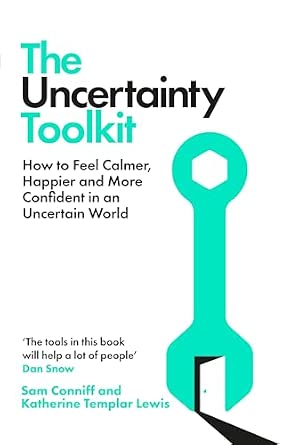
Metacognition: 6 Actions to Think More Clearly in the Fog
Metacognition is not intellectual gymnastics reserved for experts. It is a discipline of clarity: the ability to observe how you think while you are thinking. This shift is a major entry point for regaining agency over your thoughts, becoming less subject to automatic responses, and navigating uncertainty more effectively.
The first reflex to adopt: when you feel you “know” very quickly, slow down. In a foggy situation, the brain hates a vacuum. It fills gaps, applies familiar patterns to new situations, and readily jumps to a reassuring conclusion. So the problem is not only a lack of information. It is believing too early that you have understood. Under pressure, we become more closed-minded, more short-sighted, and less open to new ideas.
Concrete action :
When you feel certainty rising too quickly, ask yourself three simple questions:
What do I really know?
What am I assuming?
What am I filling in?
This micro-pause prevents a first interpretation from becoming a final truth. It does not slow you down unnecessarily. It mostly prevents you from rushing in the wrong direction.
She spent 12 years in industry, working for Bolloré Technologies, among others. She co-founded Business Digest in 1992 and has been running the company since 1998. And she took the Internet plunge in 1996, even before coming on board as part of the BD team.
Nous utilisons des cookies sur ce site. Avec votre consentement, nous les utiliserons pour mesurer et analyser l'utilisation du site. Visitez notre page sur la politique cookie pour en savoir plus.
This website uses cookies to improve your experience while you navigate through the website. Out of these, the cookies that are categorized as necessary are stored on your browser as they are essential for the working of basic functionalities of the website. We also use third-party cookies that help us analyze and understand how you use this website. These cookies will be stored in your browser only with your consent. You also have the option to opt-out of these cookies. But opting out of some of these cookies may affect your browsing experience.