L’ensemble des contenus Business Digest est exclusivement réservé à nos abonnés. Nous vous remercions de ne pas les partager.
Are You Clear-Headed… or Just Very Self-confident?
The real danger is not always lack of information. It is reacting too quickly to the discomfort produced by fog. This quiz helps you identify your reflexes when faced with fog, biases, and decisions made under pressure. Be honest: here, your first adversary is not a lack of method. It is your own brain when it wants to suffer less rather than think more accurately.
Based on
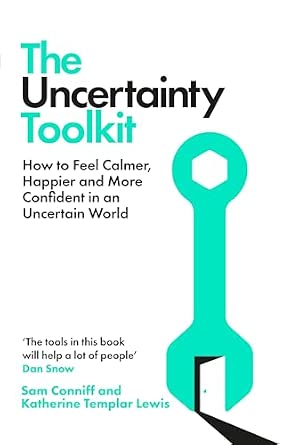
The Uncertainty Toolkit, by Sam Conniff and Katherine Templar Lewis, (Pan Macmillan 2026)
You need to decide with incomplete information. What is the best first reflex?
A. Decide immediately to show you are holding the line.
B. Wait until you have all the data, even if it takes too long.
C. Clarify what you know, what you assume, and what you still do not know.
D. Ask the opinion of the last colleague who sounded confident.
Right !
Correct answer: C
In uncertainty, a good decision begins neither with haste nor with the illusory pursuit of perfect information. It begins by clarifying the mental terrain. Distinguishing facts, hypotheses, and gray areas helps avoid two classic traps: false certainty and analysis paralysis. This small gesture of clarity allows you to move forward without lying to yourself.
Action point: before any foggy decision, write three columns: “I know / I assume / I don’t know.”
Wrong !
Correct answer: C
In uncertainty, a good decision begins neither with haste nor with the illusory pursuit of perfect information. It begins by clarifying the mental terrain. Distinguishing facts, hypotheses, and gray areas helps avoid two classic traps: false certainty and analysis paralysis. This small gesture of clarity allows you to move forward without lying to yourself.
Action point: before any foggy decision, write three columns: “I know / I assume / I don’t know.”
A simple, reassuring explanation emerges very quickly in a confusing situation. What should you do?
A. Adopt it: a clear answer is always better than anxiety-producing fog.
B. Reject it immediately: simple always means simplistic.
C. Check whether it truly explains the situation, or merely relieves the group’s discomfort.
D. Say nothing and see which way the wind blows.
Right !
Correct answer: C
When everything becomes foggy, the mind loves neat explanations, especially if they are soothing. But what reassures does not always clarify. The danger is not only misunderstanding; it is ending the game too early because an explanation relieves you. The right posture is to test the strength of that reading, not surrender to it because it reduces tension.
Action point: always ask, “Does this explanation truly explain, or does it merely relieve us?”
Wrong !
Correct answer: C
When everything becomes foggy, the mind loves neat explanations, especially if they are soothing. But what reassures does not always clarify. The danger is not only misunderstanding; it is ending the game too early because an explanation relieves you. The right posture is to test the strength of that reading, not surrender to it because it reduces tension.
Action point: always ask, “Does this explanation truly explain, or does it merely relieve us?”
You have a strong intuition about the right decision. What is the most accurate reflex?
A. Follow it immediately, because intuition is faster than analysis.
B. Ignore it completely, because only rational analysis is reliable.
C. Treat it as a useful signal, then look for what might contradict it.
D. Defend it forcefully, especially if someone dares to question it.
Right !
Correct answer: C
Intuition is neither word of gospel nor noise to eliminate. It may capture something valuable, but it must be worked with, not idolized. In uncertainty, the best posture is to listen to your intuition without merging with it. You gain the benefit of rapid perception without falling into overconfidence or irrationality disguised as flair.
Action point: when an intuition appears, ask one question: “What could prove it wrong?”
Wrong !
Correct answer: C
Intuition is neither word of gospel nor noise to eliminate. It may capture something valuable, but it must be worked with, not idolized. In uncertainty, the best posture is to listen to your intuition without merging with it. You gain the benefit of rapid perception without falling into overconfidence or irrationality disguised as flair.
Action point: when an intuition appears, ask one question: “What could prove it wrong?”
New information contradicts your first analysis. Which behavior is the surest?
A. Defend your initial position to avoid undermining your credibility.
B. Revise your reading if necessary, without treating the change as failure.
C. Change your mind immediately to show you are agile.
D. Wait for someone else to decide.
Right !
Correct answer: B
Strength does not lie in stubbornness, norin instability. It resides in the ability to revise a hypothesis when reality corrects it. Many bad decisions persist because of pride, not intelligence. Adjusting your interpretation in light of new information does not weaken your judgment; it proves you are working with reality, not with your need to have been right too early.
Action point: replace “I was wrong” with “my reading was incomplete.”
Wrong !
Correct answer: B
Strength does not lie in stubbornness, norin instability. It resides in the ability to revise a hypothesis when reality corrects it. Many bad decisions persist because of pride, not intelligence. Adjusting your interpretation in light of new information does not weaken your judgment; it proves you are working with reality, not with your need to have been right too early.
Action point: replace “I was wrong” with “my reading was incomplete.”
When you feel pressure rising, which signal should alert you first?
A. You want to go faster than usual.
B. You try to control every detail.
C. You feel your thinking closing down and you tolerate disagreement less well.
D. All of the above.
Right !
Correct answer: D
Under pressure, the problem is not only stress. It is how stress distorts your thinking and behavior. Acceleration, micro-control, closing yourself to others, the need for certainty: these are often the first symptoms of a decision shifting from clarity into defense. The danger is not being tense. It is mistaking that tense state for supreme clarity. Very often, the opposite is true.
Action point: when tension rises, check three things: your speed, your need for control, and your openness to disagreement.
Wrong !
Correct answer: D
Under pressure, the problem is not only stress. It is how stress distorts your thinking and behavior. Acceleration, micro-control, closing yourself to others, the need for certainty: these are often the first symptoms of a decision shifting from clarity into defense. The danger is not being tense. It is mistaking that tense state for supreme clarity. Very often, the opposite is true.
Action point: when tension rises, check three things: your speed, your need for control, and your openness to disagreement.
Your results
/ 5
If several correct answers seemed “too nuanced,” that is probably a good sign: you noticed that uncertainty cannot be handled with a blunt instrument, nor by worshipping ambiguity. If, on the contrary, you were tempted by the fastest, most reassuring, or most decisive answers, welcome to the club. That is precisely where biases love to settle. The point is not to become perfect. The point is to see sooner when your need for relief is overcoming your demand for clarity.
Nous utilisons des cookies sur ce site. Avec votre consentement, nous les utiliserons pour mesurer et analyser l'utilisation du site. Visitez notre page sur la politique cookie pour en savoir plus.
This website uses cookies to improve your experience while you navigate through the website. Out of these, the cookies that are categorized as necessary are stored on your browser as they are essential for the working of basic functionalities of the website. We also use third-party cookies that help us analyze and understand how you use this website. These cookies will be stored in your browser only with your consent. You also have the option to opt-out of these cookies. But opting out of some of these cookies may affect your browsing experience.