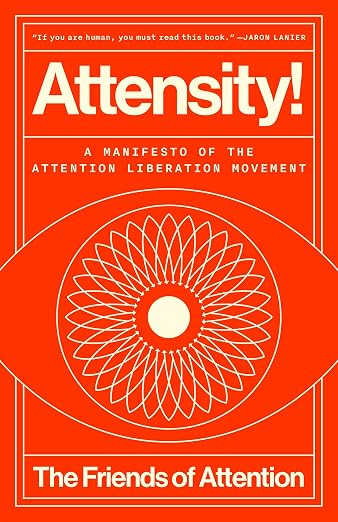
“I don’t have time.” It seems there is no escaping this phrase. It has become the quiet refrain of modern work. But maybe time isn’t the problem. Maybe the problem is what we do with it—or more precisely, what others do with it for us. Lack of time is not a personal weakness. It is often the symptom of a system that no longer knows what attention means.
What we call “lack of time” is often the symptom of an unsustainable relationship with work, where everyone is expected to be everywhere, immediately, all the time. Permanently available. Reactive without perspective. Productive without breathing room. Focused inside an environment that precisely undermines focus. But who decides what deserves a place in our day? Who sets the pace? Who decides what counts as urgent? Who protects the space we need to think, listen, weigh options, create, and pass things on? This is fundamentally a question of attention governance. Because time and attention can no longer be separated. Protecting attention is not a luxury, a matter of personal comfort, or a peripheral well-being issue. It is a condition for sound judgment, meaningful relationships, and responsibility. And for you, it has become a strategic responsibility.
1. Lack of time is not a personal failure
If you don’t have time, you must be bad at organizing yourself.
Really? It is a convenient story. Reassuring, too. It suggests that a personal problem must have a personal solution. But it ignores something essential: no one works alone inside their calendar. Our days are permeated by streams we do not fully control. Mandatory meetings. Instant messages. Top-down emergencies. Conflicting requests. Collaboration tools. Parallel channels. Alerts. Follow-ups. Pending decisions. Constant micro-demands. And… management cultures that confuse availability with commitment. The result? Everyone becomes reachable, mobilizable, interruptible. All the time. And the cost is enormous, both in terms of fatigue and clear thinking.
Blaming individuals obscures the real questions.
How does the organization manufacture urgency? Why do meetings keep multiplying? What behaviors are actually rewarded: clarity or availability? Judgment or responsiveness? Decision quality or processing speed? When time is colonized, attention fragments. When attention fragments, judgment weakens. And when judgment weakens, decisions may become faster—but not necessarily better. Organizations sometimes consume attention faster than they allow people to restore it. “I don’t have time” should therefore be heard as a signal, not merely an admission of overload. It is an organizational symptom, revealing a way of working that demands a great deal of attention while doing very little to protect the conditions required to give it fully. The organization is constantly moving forward. But it is thinking less.
She spent 12 years in industry, working for Bolloré Technologies, among others. She co-founded Business Digest in 1992 and has been running the company since 1998. And she took the Internet plunge in 1996, even before coming on board as part of the BD team.
Nous utilisons des cookies sur ce site. Avec votre consentement, nous les utiliserons pour mesurer et analyser l'utilisation du site. Visitez notre page sur la politique cookie pour en savoir plus.
This website uses cookies to improve your experience while you navigate through the website. Out of these, the cookies that are categorized as necessary are stored on your browser as they are essential for the working of basic functionalities of the website. We also use third-party cookies that help us analyze and understand how you use this website. These cookies will be stored in your browser only with your consent. You also have the option to opt-out of these cookies. But opting out of some of these cookies may affect your browsing experience.