What we call “lack of time” is often the symptom of an unsustainable relationship with work, where everyone is expected to be everywhere, immediately, all the time. Permanently available. Reactive without perspective. Productive without breathing room. Focused inside an environment that precisely undermines focus. But who decides what deserves a place in our day? Who sets the pace? Who decides what counts as urgent? Who protects the space we need to think, listen, weigh options, create, and pass things on? This is fundamentally a question of attention governance. Because time and attention can no longer be separated. Protecting attention is not a luxury, a matter of personal comfort, or a peripheral well-being issue. It is a condition for sound judgment, meaningful relationships, and responsibility. And for you, it has become a strategic responsibility.
1. Lack of time is not a personal failure
If you don’t have time, you must be bad at organizing yourself.
Really? It is a convenient story. Reassuring, too. It suggests that a personal problem must have a personal solution. But it ignores something essential: no one works alone inside their calendar. Our days are permeated by streams we do not fully control. Mandatory meetings. Instant messages. Top-down emergencies. Conflicting requests. Collaboration tools. Parallel channels. Alerts. Follow-ups. Pending decisions. Constant micro-demands. And… management cultures that confuse availability with commitment. The result? Everyone becomes reachable, mobilizable, interruptible. All the time. And the cost is enormous, both in terms of fatigue and clear thinking.
Blaming individuals obscures the real questions.
How does the organization manufacture urgency? Why do meetings keep multiplying? What behaviors are actually rewarded: clarity or availability? Judgment or responsiveness? Decision quality or processing speed? When time is colonized, attention fragments. When attention fragments, judgment weakens. And when judgment weakens, decisions may become faster—but not necessarily better. Organizations sometimes consume attention faster than they allow people to restore it. “I don’t have time” should therefore be heard as a signal, not merely an admission of overload. It is an organizational symptom, revealing a way of working that demands a great deal of attention while doing very little to protect the conditions required to give it fully. The organization is constantly moving forward. But it is thinking less.
The real danger is not always lack of information. It is reacting too quickly to the discomfort produced by fog. This quiz helps you identify your reflexes when faced with fog, biases, and decisions made under pressure. Be honest: here, your first adversary is not a lack of method. It is your own brain when it wants to suffer less rather than think more accurately.
Based on
The Uncertainty Toolkit, by Sam Conniff and Katherine Templar Lewis, (Pan Macmillan 2026)
The point is not simply to regain motivation. It is to understand what freezes you, then recreate the conditions for connection: connection with your body, your attention, your intuition, others, and what truly matters. Rebuilding connection is what allows you to break free from stasis and set yourself into motion again.
1. Name the stasis instead of blaming yourself
First reflex: stop viewing immobility as a character flaw. You are not necessarily lazy, inconsistent, or “not up to it.” You may simply have entered a form of stasis due to uncertainty and overload. This stasis often hides under other names: fatigue, loss of direction, discouragement, lower motivation, existential fog. As long as you attribute moral meaning to the state, you add shame to paralysis. If you recognize it as a human response to uncertainty, you can start acting on it again.
Concrete action:
When you feel stuck, replace “What is wrong with me?” with three more useful questions:
What exactly is freezing me?
Is this a lack of energy, clarity, meaning, or safety?
What have I been cut off from in recent days: myself, others, or my north star?
This shift in language already changes your posture. You stop judging. You start diagnosing.
The first reflex to adopt: when you feel you “know” very quickly, slow down. In a foggy situation, the brain hates a vacuum. It fills gaps, applies familiar patterns to new situations, and readily jumps to a reassuring conclusion. So the problem is not only a lack of information. It is believing too early that you have understood. Under pressure, we become more closed-minded, more short-sighted, and less open to new ideas.
Concrete action :
When you feel certainty rising too quickly, ask yourself three simple questions:
What do I really know?
What am I assuming?
What am I filling in?
This micro-pause prevents a first interpretation from becoming a final truth. It does not slow you down unnecessarily. It mostly prevents you from rushing in the wrong direction.
Uncertainty is still too often treated as a temporary disruption, a failure of control, or an anomaly that will soon pass. That is the wrong interpretation. Uncertainty has become the new normal. The more you try to suppress it, the more you risk stiffening, overinterpreting, deciding too quickly, or freezing. The real issue is not uncertainty itself, but the way you respond to it. That response shapes the quality of your decisions, your capacity to learn, your openness, your creativity, and your ability to remain in motion when nothing is set in stone. The rare skill is no longer the ability to predict everything. It is to move through the unknown without losing either your discernment or your momentum.
1. Why Uncertainty Unsettles You So Deeply
Uncertainty first activates the body and fear
Uncertainty is not only an intellectual problem. It is first and foremost a bodily and emotional experience. Before reason has time to organize things, your alert system switches on. Something tightens. Your mind searches for a fixed point. This is why uncertainty can so quickly degrade presence and judgment, even in highly competent people. You are not reacting with ideas alone. You are reacting with a body that is trying to protect itself. That difference matters. On uncertain ground, you are not entering a simple exercise in analysis. You are entering a situation that mobilizes survival reflexes, vigilance, and the need for safety.
It feeds the worry loop, avoidance, and overreaction
From there, doubt does not remain neutral. It circles. It repeats. It becomes what we might call a worry loop: you worry about uncertainty, then you worry about your own worry. This spiral drives you to seek immediate relief. You may overreact, postpone, practice avoidance, retreat into routines, tighten control, or rush toward answers that are too quick. The mind wants to escape the fog not because it has already understood, but because it cannot tolerate the tension. This is how false certainties are born: not as signs of mastery, but as psychological sedatives.
The real issue: your intolerance to uncertainty
What weakens you is not uncertainty itself, but a low tolerance for it. When your uncertainty tolerance is low, anxiety rises quickly, your field of vision narrows, and you reflexively fall back on reassuring answers.
When you tolerate uncertainty better, you remain more curious, more adaptable, and more able to learn. The point is not to make the uncertain disappear, but to become stable enough not to be immediately trapped by it. This is a major shift in perspective. The question is no longer, “How do I quickly return to a perfectly readable world?” It becomes, “How do I keep moving with clarity when nothing is fully readable?”
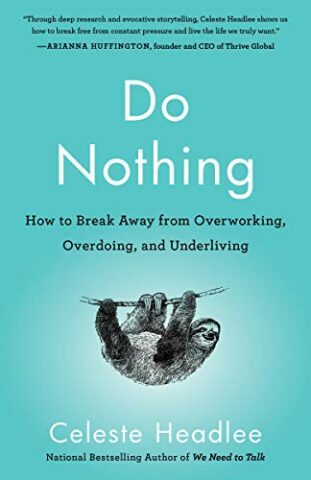
Do you answer your e-mails on a Sunday night? Do you search for ways to hack your brain to be more efficient? Do you only read the first paragraph of news articles you’re interested in because you don’t have time to read the rest? Are you piling more and more onto your plate at an increasing rate yet deriving less and less satisfaction? Welcome to the “always more” era, devoted to the cult of constant activity and perpetual improvement – which are false gods. Because people are not machines: we need breaks. By seeking to constantly optimize our use of time, we end up wasting it. And what we do loses meaning. It’s time to stop rushing around and instead invent a world more suited to human beings. We can start by questioning some preconceptions about time management, performance, and productivity.
Based on
Do Nothing: How to Break Away from Overworking, Overdoing, and Underliving by Celeste Headlee (Harmony Book, 2020).
Preconception #1 : wasting time is a cardinal sin
Every era produces heroes who embody its dominant values. Bill Gates would get up at 4 a.m. every morning and work 16 hours a day when Microsoft was just starting. Jeff Bezos and his inner circle claim they were connected 24/7 in the mid-90s. Marissa Mayer was said to work 130 hours per week at Google.
This contemporary model of the workaholic boss is not benign. It contributes to the cult of longer working hours, which spreads to all levels of a company. The number of hours worked is seen as the simplest – if not the fairest – way of measuring a colleague’s performance. This purely quantitative logic is a legacy of Max Weber, put forward in The Protestant Ethic and the Spirit of Capitalism at the beginning of the 20th century. Time is money: not making the most of it is a cardinal sin. The incitement to always do more – and to make those opposed to the idea feel guilty – has become common. Laziness has never gotten such bad press. Using every available minute is a cardinal virtue.
This imperative has spread widely, even when it comes to leisure time. The number of nine-hole golf courses increased because players found that the classic, 18-hole course took too long, according to a 2015 poll.1Similar impatience is driving a growing number of podcast and audio book listeners to double, or even triple, listening speed.
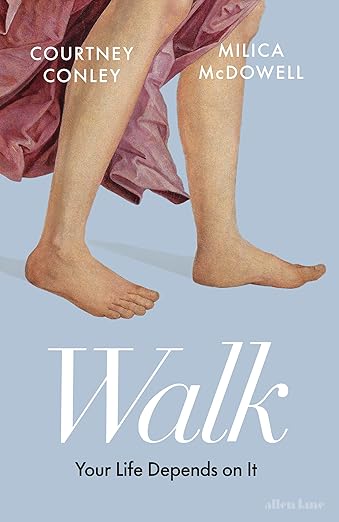
By Courtney Conley and Milica McDowell
(Balance, may 2026)
Forget 10,000 steps and heroic workouts: better health may begin with simply walking better. Speed, cadence, balance, feet, and footwear become critical indicators of mobility, independence, and longevity. How the most ordinary movement in our daily lives became a sixth vital sign.
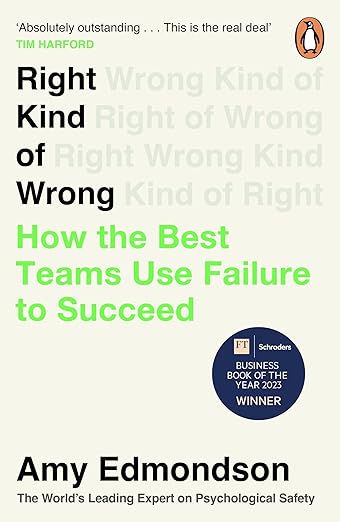
Right Kind of Wrong
By Amy Edmondson
(Atria Books , 2023)
Forget Silicon Valley’s “fail fast, fail often.” Edmondson paints a more nuanced picture of failure, and encourages “intelligent failures” that lead to discoveries and innovation while reducing the risk of avoidable destructive mistakes. A guide to becoming more resilient and inventive in a world that refuses to sit still.
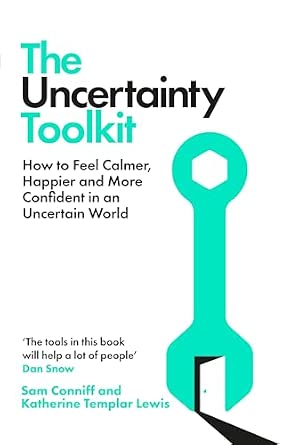
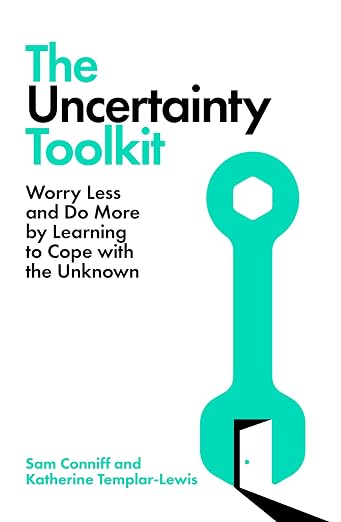
The Uncertainty Toolkit
By Sam Conniff and Katherine Templar Lewis
(Bluebird, 2026)
What if uncertainty were not the problem, but our reflex response to it? Blending neuroscience, extraordinary stories, and practical exercises, this book turns fear into action, mental fog into agility, and paralysis into connection. A survival kit for spending less energy predicting the future and more learning how to move through it.
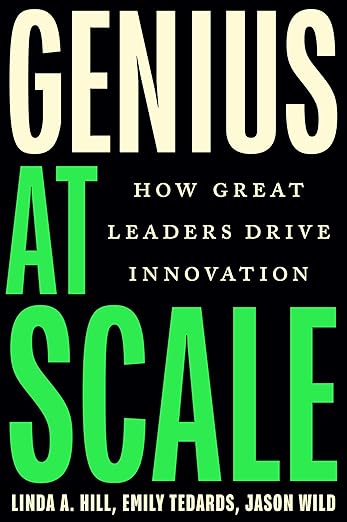
Genius at Scale
By Linda A. Hill, Emily Tedards and Jason Wild
(Harvard Business Review Press, 2026)
The myth of the visionary leader with a compliant crowd marching behind has aged badly. Innovation at scale depends on leaders who act as architects, bridge-builders, and catalysts: shaping cultures, connecting partners, and starting movements. How sharing the wheel can take you much farther.
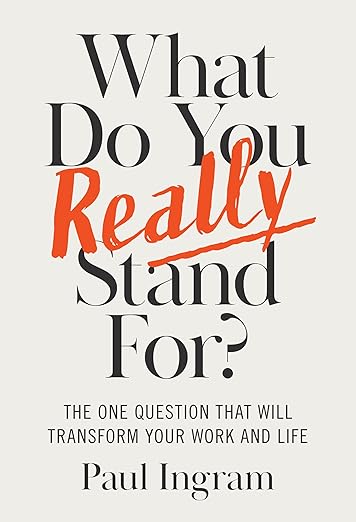
What Do You Really Stand For?
By Paul Ingram
(Harvard Business Review Press, 2026)
Values plastered on a lobby wall are useless if they never help settle hard decisions. Ingram proposes identifying what matters most, then turning it into a practical tool for choosing, motivating, resolving conflict, and building more coherent teams. A personal and collective compass—provided you accept that it may point somewhere uncomfortable.
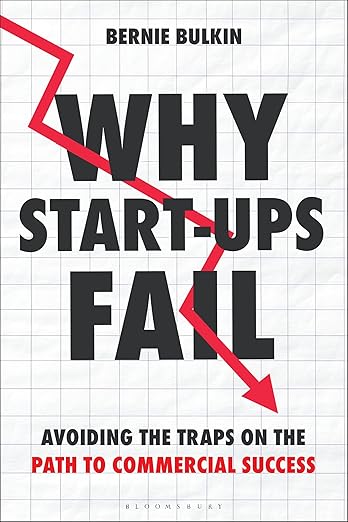
Why Start-Ups Fail
By Bernie Bulkin
(Bloomsbury Business, 2026)
Startups do not die only from a bad idea or bad luck. Broken technology, misunderstood markets, thin engineering, weak leadership, passive boards, insufficient cash: Bulkin dissects six largely avoidable pitfalls. A useful antidote to startup mythology—and to the intellectually lazy advice to “fail fast.”
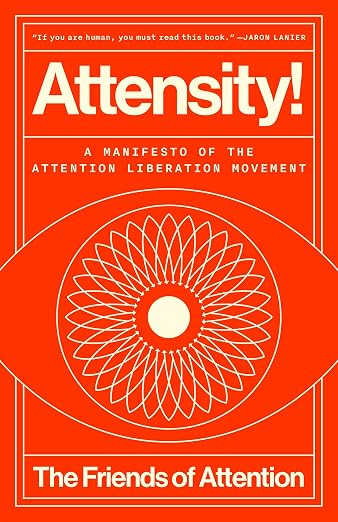
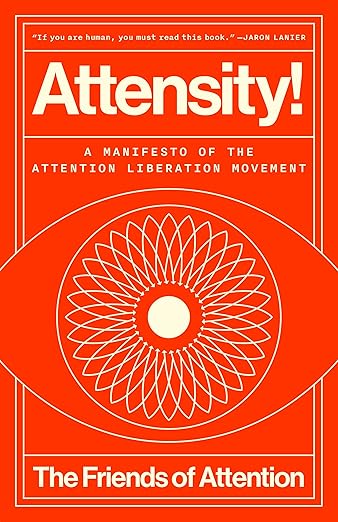
Attensity!
By The Friends of Attention, edited by D. Graham Burnett, Alyssa Loh and Peter Schmidt
(Crown, 2026)
Your attention is not merely distracted. It is captured, fragmented, and sold by an industry that turns every glance into revenue. Against this “human fracking,” the answer is not another productivity hack but a collective movement built on study, coalitions, and sanctuaries for attention. How to stop optimizing attention and start liberating it.
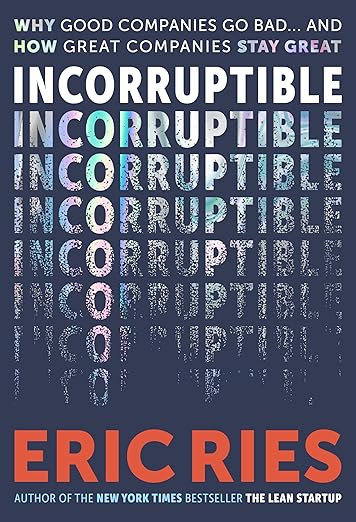
Incorruptible
By Eric Ries
(Authors Equity, May 2026)
Good companies do not always betray their missions because their leaders turn bad; governance often drives them to do so. Ownership, incentives, and decision rules create a kind of “financial gravity” that gradually turns success into extraction. How to build a company that can scale without selling its soul along the way.
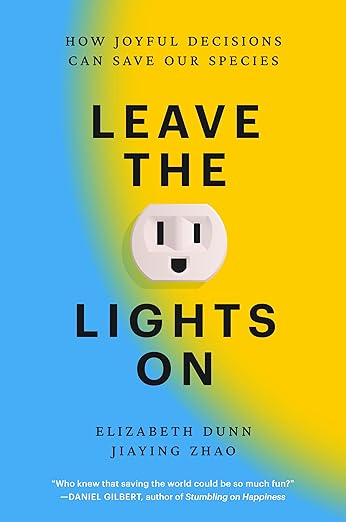
Leave the Lights On
By Elizabeth Dunn and Jiaying Zhao
(Avery, June 2026)
Punitive self-denial is terrible fuel for lasting behavioral change. It’s much better to focus on high-impact climate choices that also improve our lives than to feel guilty about every light left on. How joy—not permanent sacrifice—can become a transition strategy.
When you’re beginning to feel exhausted, forget passive rest which isn’t very effective. You are better off setting personal goals for your weekends and days off: go and see friends, organize your closet, or plan to see an exhibition. What benefits can you hope to reap?
You will spend less time on passive leisure such as watching TV or having a nap.
You will feel (8 to 12%) happier than those who planned nothing. That’s not to be sniffed at.
And you’ll take this positive mood back to work with you.
Take care to stay flexible though, and not pile on additional obligations! Keep some space for spontaneous activities, and give yourself permission not to achieve all your goals!
The pandemic has significantly impacted all our leisure and holiday time, so let’s take back as much control as we can. Prioritize the goals that bring you into contact with others; they will boost your feelings of happiness!
Nous utilisons des cookies sur ce site. Avec votre consentement, nous les utiliserons pour mesurer et analyser l'utilisation du site. Visitez notre page sur la politique cookie pour en savoir plus.
This website uses cookies to improve your experience while you navigate through the website. Out of these, the cookies that are categorized as necessary are stored on your browser as they are essential for the working of basic functionalities of the website. We also use third-party cookies that help us analyze and understand how you use this website. These cookies will be stored in your browser only with your consent. You also have the option to opt-out of these cookies. But opting out of some of these cookies may affect your browsing experience.