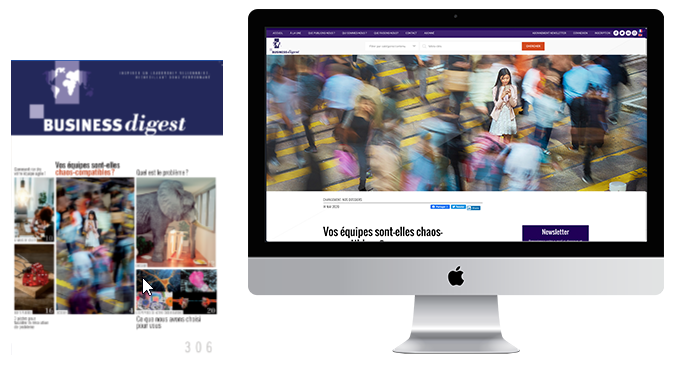
Robustness vs. the illusion of Performance
The obsession with performance makes you vulnerable to crises. True robustness comes from diversity, redundancy, and adaptability. It’s not about predicting everything any more—it’s about being ready for anything.
You’ve optimized everything. On paper, your company checks all the boxes: it’s modern, agile, and ready for anything. And yet… you can feel it—everything is still just as complicated. All it would take is one crisis, one unexpected event, one supplier failing, and suddenly panic would set in. Your teams scramble, processes turn into obstacles, and the agility you thought you had vanishes like a mirage.
Why? Because you’ve mistaken optimization for robustness, flexibility for instability, and risk management for red tape. You aimed to make your company more efficient… but in reality, you’ve made it more fragile. It’s time to quit racing toward disaster under the illusion that you’re speeding up. Here are five key tools to help you rethink your model—before you’re forced to.

L’Entreprise robuste
by Olivier Charbonnier, Olivier Hamant et Sandra Enlart.
Odile Jacob, 2025.
1. Optimize or adapt?
Your obsession with efficiency is making you weaker
In response to economic instability and repeated crises, you’ve built strategies to absorb shocks. You’ve outsourced, automated, and streamlined your processes. And what’s the result? A hyper-optimized organization stretched to breaking point, where even the slightest disruption can bring everything to a halt.
Recent crises have made it clear: over-reliance on global supply chains, strained suppliers, and just-in-time logistics turns every disruption into chaos. The moment something falls out of line—a supply chain crisis, geopolitical tension, or talent shortage—cracks appear in your rigid system. In the pursuit of optimization, you’ve eliminated your room for maneuver.
Instead of building true resilience, your organization clings desperately to fragile flexibility. It’s performing a juggling act rather than preparing for instability, undermining its ability to absorb shocks. A robust organization isn’t one that functions perfectly when everything is running smoothly—it’s one that holds up when things fall apart.
Take a tip from nature: Bring flexibility back into your organization
It’s time to rethink your approach: maximum efficiency shouldn’t be the goal, but rather a balance. Resilience isn’t built on relentless optimization, but through robustness. And robustness means embracing uncertainty, incorporating buffer zones, and designing organizations that can withstand shocks instead of chasing a perfection that doesn’t exist.
Action Plan: Identify your weak spots and strengthen them
- Smart stock management: Avoid absolute just-in-time supply chains for critical resources—build safety reserves instead.
- Retain core skills in-house: Stop outsourcing everything, and ensure redundancy in key roles to avoid being caught off-guard by people leaving or crises.
- Embrace strategic inefficiencies: Create buffers that prevent you from being blindsided. Design a modular organization that can operate in degraded mode without grinding to a halt.
2. Agility or insecurity?
Your company is more rigid than you think
You’ve launched cross-functional projects, encouraged initiative, and adopted agile methods. But have you truly changed the way you operate? If your teams still need endless approvals, follow rigid procedures, and justify every initiative, your company is no closer to agility than before.
What you call flexibility is often just orchestrated pressure.In reality, these superficial innovations barely disguise a system still obsessed with short-term profitability. What’s sold as flexibility is often just another way to tighten the screw.
Behind the facade of stand-up meetings and colorful Post-it notes, relentless optimization still rules. Hierarchies haven’t disappeared; they’ve just been rebranded. Agility becomes a trap: it helps you move faster, yes, but only in the same direction. It’s not transformation—it’s just a forward charge.
A truly agile company doesn’t just adapt quickly: it fundamentally rethinks how it decides and acts.As long as hierarchy and rigid processes overshadow initiative and improvisation, you’ll remain stuck in fake agility that fails to tackle core problems.
Advice: Give your teams real power
Agility isn’t just about speeding up processes: it’s about eliminating bottlenecks and streamlining decision-making. It’s not about delegating everything but about structuring resources that can absorb shocks.
Action plan: Three concrete steps for real flexibility
- Invest in in-house skills instead of outsourcing everything. Train your teams in structured improvisation: they should be able to make decisions without waiting for constant approvals.
- Streamline decision-making processes. Avoid weeks-long adjustments by reducing the number of approval layers. The fewer the steps, the greater your responsiveness.
- Prioritize long-term partnerships over the cheapest short-term alternatives.
3. Protect or paralyze?
Your safeguards have turned into roadblocks
You’ve implemented standards, certifications, and crisis management procedures. In theory, that’s a smart move. In practice, it often leads to an endless spiral of regulatory inflation. The more you try to anticipate disasters, the more you bog down your organization’s ability to function. The result? A bloated bureaucracy that stifles action instead of enabling it. Is it any surprise, then, that innovation struggles to take root?
Worse, when the unexpected does happen, panic sets in. You end up improvising, bypassing processes, and scrambling to adapt. That’s no coincidence: your risk management strategy was designed for predictable crises and controllable scenarios. But in today’s world, everything changes in the blink of an eye.
Nowadays, you’re operating in an environment where crises are increasingly systemic and unpredictable. What’s the point of a protocol if no one can implement it in real time?
Advice: Simplify and stress-test your crisis plans
The illusion of control is the greatest vulnerability. The more you believe you have everything under control, the more exposed you are to the smallest glitch. Effective risk management isn’t a 300-page manual no one reads—it’s the ability to act quickly and decisively. The real question is: If everything collapses tomorrow, what will you have left?
Action plan: Streamline your systems for real-world effectiveness
- Shift from rigid control to adaptive decision-making. Train your teams to make quick decisions instead of waiting for endless approvals.
- Clarify what’s essential and what’s not. Not all risks are equal—focus your efforts on what could truly threaten your business.
- Test your crisis scenarios on a regular basis. An emergency plan that’s never been tested is useless. Put it into action to find any weaknesses before they catch you off-guard.
4. Do better instead of just talking about it!
Your CSR commitment is often just for show
You promote your carbon neutrality goals, social commitments, and eco-friendly reports… but what do they actually change? If your business model always follows the same short-term optimization logic, these efforts will remain superficial.
Why is this? It’s because you approach CSR as a communication exercise rather than a genuine strategic shift.
Behind the pledges to protect the climate, people, and biodiversity, contradictions pile up. How many companies that boast about their carbon neutrality are still investing heavily in polluting industries? How many cut their emissions… by outsourcing production elsewhere?
Genuine transformation demands tough choicesthat impact short-term profitability, and fundamentally reshape how you produce, hire, and invest. Simply layering sustainability onto an unchanged system only postpones the problem. CSR shouldn’t be just a line in an annual report or a moral cover: it should drive a radical transformation of business models.
Advice: Align your business model with your commitments
Don’t just aim to “limit negative impacts”: find ways for your company to be a force for good. Instead of treating the ecological and social transition as a constraint, use it as a driver for innovation.
Action plan: Embed CSR into your strategic decision-making
- Shifting away from fossil fuels isn’t just about sustainability—it also stabilizes costs in the face of volatile market prices.
- Investing in sustainable materials helps anticipate resource limitations and avoids dependence on high-risk resources.
- Rethinking production and distribution models creates new opportunities instead of waiting for regulations to force your hand.
5. Put a stop to makeshift management
The problem: You’re stuck in short-term thinking
Your KPIs, quarterly projections, and financial tracking govern your every move, resulting in decisions that seem optimal today but that could be disastrous tomorrow.
By prioritizing the short term, you overlook deeper trends. The biggest threats to your business won’t come from a temporary drop in demand or a market fluctuation, but from a structural shift you failed to anticipate in time.
If you’re not thinking 5 or 10 years ahead, you’ll be stuck chasing every new crisis. And at this point, it’s not even about predicting the future—it’s about getting ready for it. Moving beyond a purely productivity-centered model requires a systemic approach that embraces uncertainty and leverages fluctuations as a driver for innovation.
Advice: Step back and reassess your priorities
Shift your decision-making horizon. It’s no longer about predicting the future: it’s about being ready for it. The time you invest in anticipation today will save you months of crisis management tomorrow. The real question isn’t: “How do we predict what’s coming?” but rather: “How do we prepare for any possibility?”
Action plan: Stop flying blind
- Carry out an honest appraisal of your long-term vulnerabilities. What dependencies could threaten your business in 5 or 10 years?
- Make strategic decisions that won’t pay off immediately. Investing in training, innovation, or diversification—even at the cost of short-term margins—can be the key to long-term survival.
- Create space for strategic thinking. If you spend all your time firefighting, who’s thinking about the future?
You can keep optimizing every variable, automating processes, cutting costs, and streamlining operations. But if you don’t rethink how you approach adaptation, robustness, and crisis management, you’ll always be reacting instead of anticipating.
A truly resilient company isn’t one that controls everything: it’s a company that adapts quickly and effectively. The choice is yours: will you simply bear the burden of change, or learn to absorb it?
© Copyright Business Digest - All rights reserved