You have a key role to play in preventing burnout, which has much more to do with how people interact in the team, the work environment and the corporate culture than with individual difficulties.
Based on
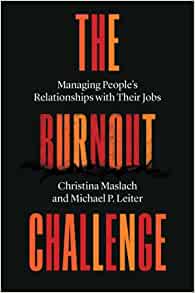
The Burnout challengeby Christina Maslach and Michael P. Leiter (Harvard University Press, 2022).
1/ SPOT THE WARNING SIGNS
Don’t rely on your employees to alert you to burnout: the victims often don’t see it coming until it’s too late.Your task is to be attentive to these warning signs:
Fatigue and exhaustion. Identify signs of lingering fatigue or an inability to regain usual energy levels in spite of rest. For instance, your employee still seems exhausted on returning from vacation or sick leave.
A negative mindset. More frequent signs of cynicism, withdrawal and pessimism should sound the alarm. Make sure it’s simply a one-off situation and doesn’t spread to the entire team.
Inefficiency. A drop in productivity, frequent mistakes, a deterioration in the level of service, delays and absenteeism (or its counterpart, presenteeism) are all early indicators of potential burnout. The individual can no longer concentrate even on simple tasks.
Nous utilisons des cookies sur ce site. Avec votre consentement, nous les utiliserons pour mesurer et analyser l'utilisation du site. Visitez notre page sur la politique cookie pour en savoir plus.
This website uses cookies to improve your experience while you navigate through the website. Out of these, the cookies that are categorized as necessary are stored on your browser as they are essential for the working of basic functionalities of the website. We also use third-party cookies that help us analyze and understand how you use this website. These cookies will be stored in your browser only with your consent. You also have the option to opt-out of these cookies. But opting out of some of these cookies may affect your browsing experience.